
How to Cut and Light a Cigar Properly: No Cracked Wrapper, No Harsh First Draw
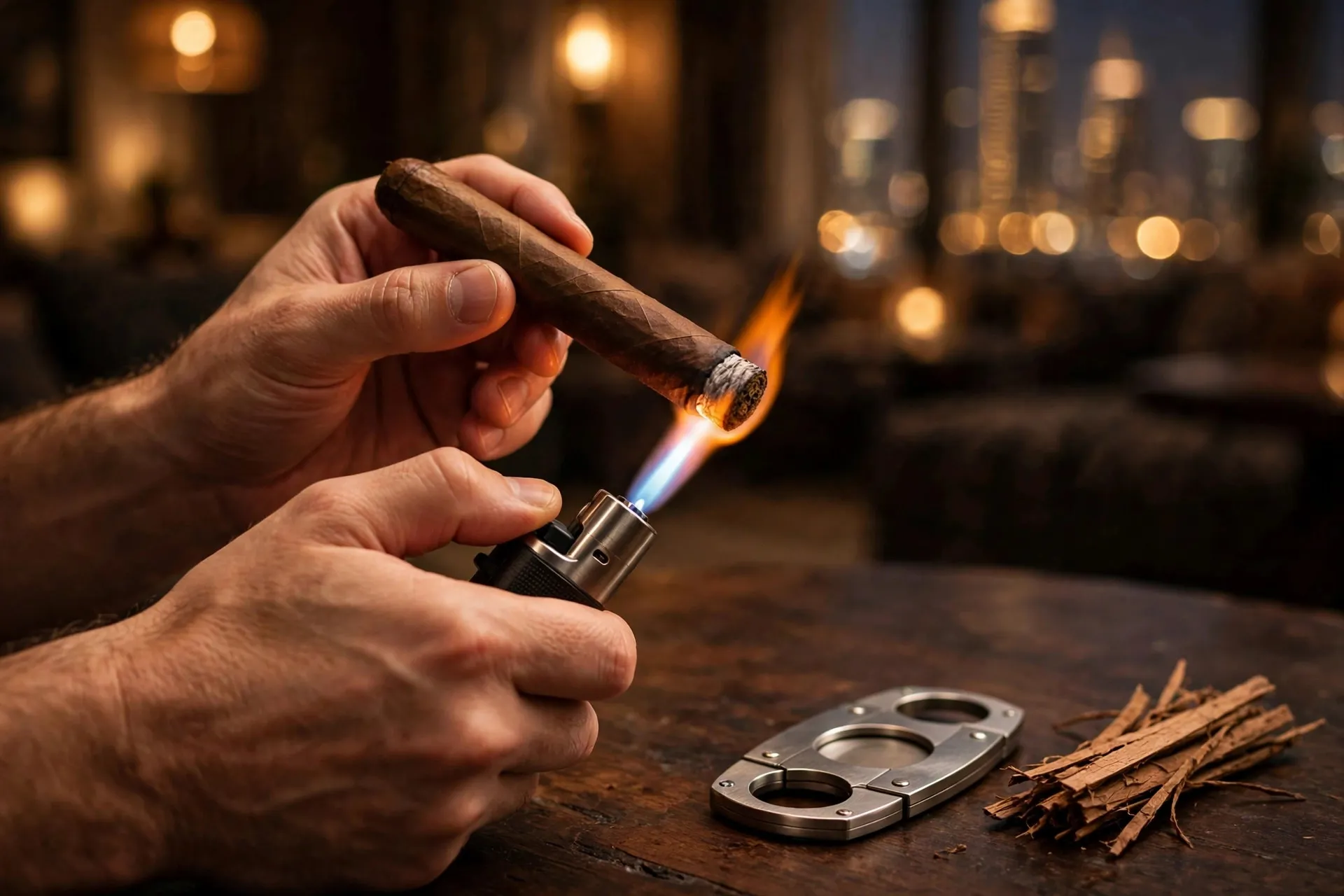
Knowing how to cut a cigar and how to light a cigar properly is the difference between a smooth, flavourful smoke and a cracked wrapper with a harsh, bitter first draw. Most ruined cigars are not bad cigars — they were cut too deep, lit too fast, or toasted with the wrong flame. This guide walks you through the exact method experienced smokers use in the UAE, step by step, so your first draw tastes the way the blender intended.
What you need before you start
You do not need a drawer full of accessories, but three things matter:
A sharp cutter.
A dull blade tears the wrapper instead of cutting it. A proper set like the Cigar Cutter Set 3-in-1 gives you a guillotine, a V-cut and a punch in one place, so you can match the cut to the cigar.
A clean flame. A butane torch lighter or a cedar spill. Never use a petrol lighter or a scented candle — the fumes get into the tobacco and spoil the first minutes.
A stable ashtray. A cigar needs to rest between draws. The Ceramic Cigar Travel Ashtray keeps a robusto or churchill steady instead of rolling onto the table.
That is all. No cutter technique can rescue a dry cigar, so store your cigars correctly and buy from a seller who keeps them in proper condition.
Step 1: Choose your cut — straight, V or punch
The cut opens the cap so air can move through the cigar. Each style changes the draw slightly:
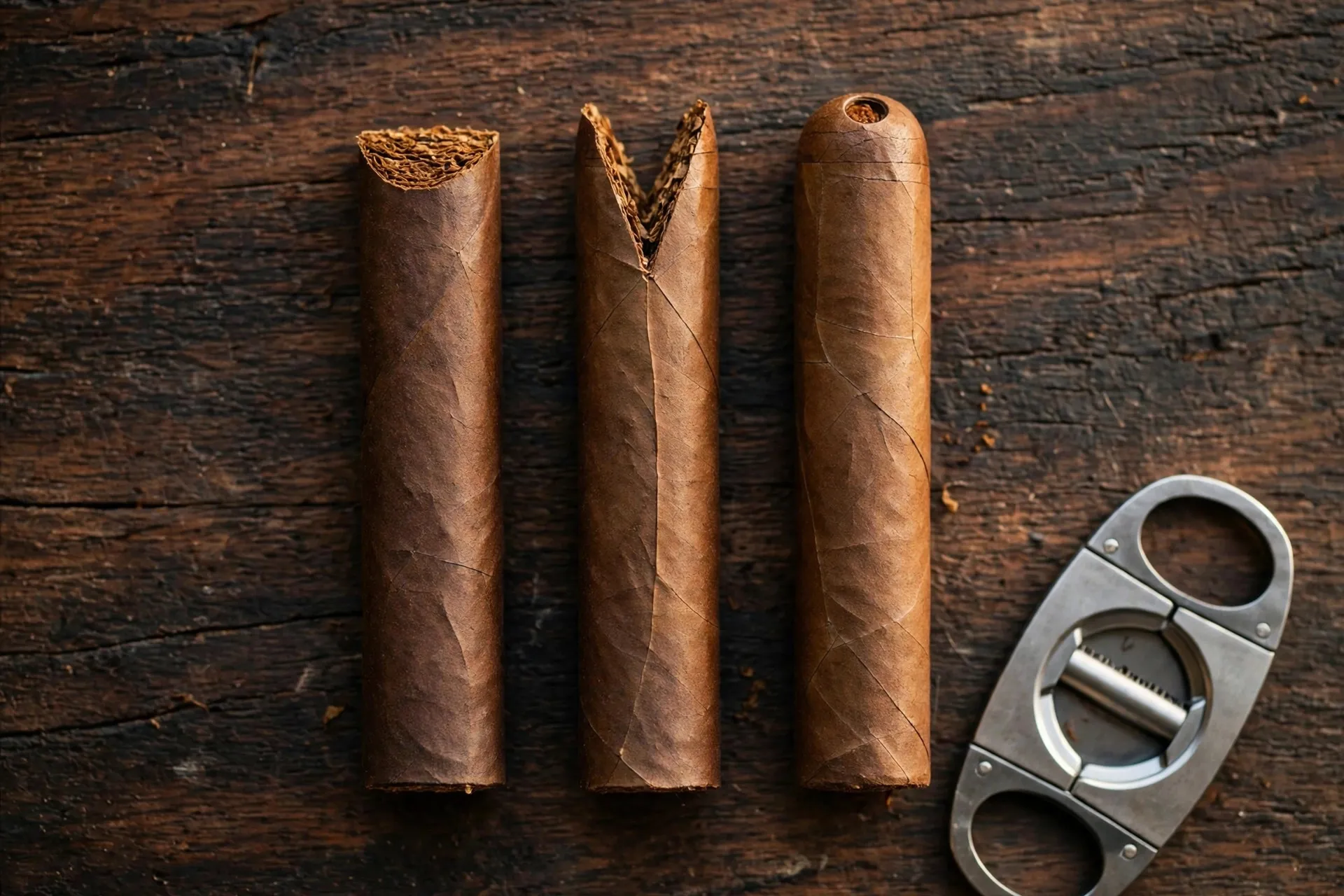
Straight (guillotine) cut — the classic. The most open draw and the best choice for most robustos and churchills. This is the cut to learn first.
V-cut — cuts a wedge into the cap. It concentrates the smoke on the tongue and resists the loose bits a straight cut can leave. Good for thicker ring gauges.
Punch cut — removes a small circle from the cap. The draw is tighter and the smoke warmer. It works well on medium-gauge cigars, but can build up tar on small cigars and make the last third bitter.
For a torpedo or other pointed (figurado) cigar, a straight cut is normal — just cut a little less, because the head is narrower.
Step 2: Make the cut — less than you think
Almost every cracked wrapper comes from cutting too much. Follow this exactly:
Look at the head of the cigar. You will see the shoulder — the curved line where the cap meets the straight body.
Place the cutter 1–2 mm above that line, on the cap only. You are removing a thin cap, not a slice of the cigar.
Cut in one firm, quick motion. A slow squeeze crushes the filler and tears the wrapper.
Check the end. You should see the filler and a clean edge of wrapper still holding it in place. If the wrapper starts to unravel, you cut below the shoulder — note it and cut higher next time.
A good test before lighting: take a cold draw. Air should move with slight resistance, like drinking through a straw. If nothing moves, take off one more millimetre. If it feels completely open and loose, the cut was generous — smoke it a little more slowly.
Step 3: Toast the foot before you light it
Toasting is the step beginners skip, and it is why their cigars burn unevenly and taste harsh at the start.
Hold the cigar at a 45-degree angle, with the foot (the open end you will light) just above the flame — not in it.
Rotate the cigar slowly so the whole edge of the foot darkens evenly. This takes 20–40 seconds.
Blow gently on the foot. The edge should glow evenly all the way around.
Toasting warms the tobacco and burns off the bitter edge gases, so the first real draw is clean instead of acrid.
Step 4: Light it and take the first draws
Now put the cigar to your lips, keep the flame just under the foot, and draw gently while you rotate the cigar a quarter turn at a time. Two or three slow draws should bring it to an even glow. Then stop and look: the burn line should be straight and the ash a firm light grey.
From here, pace matters more than anything. One slow draw every 30–60 seconds keeps the cigar cool. Puffing fast overheats the smoke, and overheated smoke is harsh smoke — no matter how good the cigar is. Rest it on the ashtray between draws.
5 mistakes that ruin the first draw
Cutting below the shoulder — the wrapper unravels for the whole smoke.
Putting the cigar into the flame — charred tobacco tastes bitter; heat the foot above the flame instead.
Using a petrol lighter — the taste goes straight into the cigar.
Lighting only the middle — one side never catches and the cigar "canoes" down one side. Rotate while you light.
Smoking too fast — the most common mistake of all. Slow down and the flavour opens up.
A good first cigar to practise on
Practise the cut and the toast on a well-made robusto — the size is forgiving and the draw shows you immediately if the cut was right. The Cohiba Robusto is a classic benchmark, and the Cohiba Siglo II suits anyone who prefers a slightly slimmer corona. If you want the technique without committing to a full cigar, work through the same steps on a premium cigarillo from our cigarillos collection — most need no cut at all, which makes them an easy first step.
Frequently Asked Questions
How much should I cut off a cigar?
Only 1–2 mm — the thin cap above the shoulder line. Cutting more risks the wrapper unravelling.
Can I cut a cigar with a knife or my teeth?
In an emergency a very sharp knife works, but it usually tears the wrapper. Biting almost always ruins the cap. A proper cutter costs little and protects a much more expensive cigar.
Why does my cigar taste harsh right after lighting?
Usually one of three causes: the foot was put directly into the flame, the cigar was not toasted, or you are puffing too fast. Toast first, light above the flame, and slow down to one draw a minute.
What if my cigar goes out?
Tap off the ash, toast the foot again above the flame and relight it the same way. A cigar relit within the session tastes fine; do not relight one the next day.
Master the cut and the toast once, and every cigar after it gets better. Browse genuine cigars, cutter sets and ashtrays at SmokeTime, with fast delivery across Dubai and the Emirates.
For adults only (18+ or the legal age in your emirate).
Smoking causes serious health problems.